
Today in Aviation, Spain’s fourth-largest airline, Spanair (JK), ceased operations in 2012.
Initially based at Palma de Mallorca (PMI), Spanair was formed in December 1986 as a joint venture between SAS Scandinavian Airlines (SK) and Spanish travel agent Viajes Marsans. European charter flights commenced in March 1988, with a fleet of McDonnell Douglas MD-80 jets sourced from SAS.
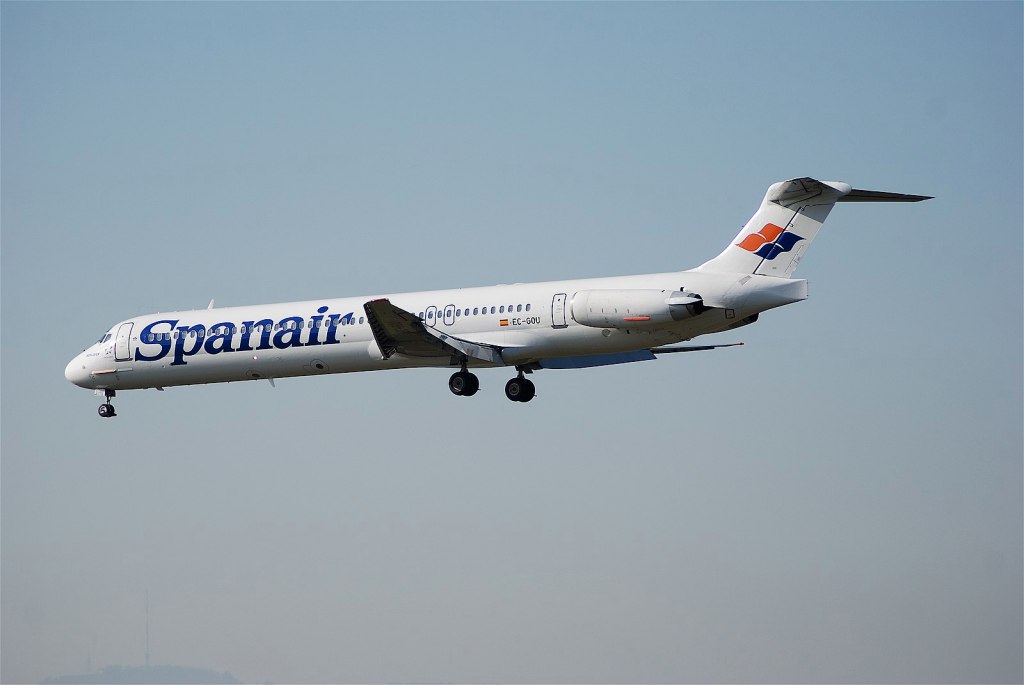
Spanair commenced long-haul charter flights to the United States, Mexico, and the Dominican Republic in 1991. It entered the scheduled market in March 1994, when it began Spanish domestic flights, competing with Iberia (IB) and Air Europa (UX). On November 20, 1997, the airline started its first scheduled transatlantic services between Madrid Barajas (MAD) and Washington Dulles (IAD).
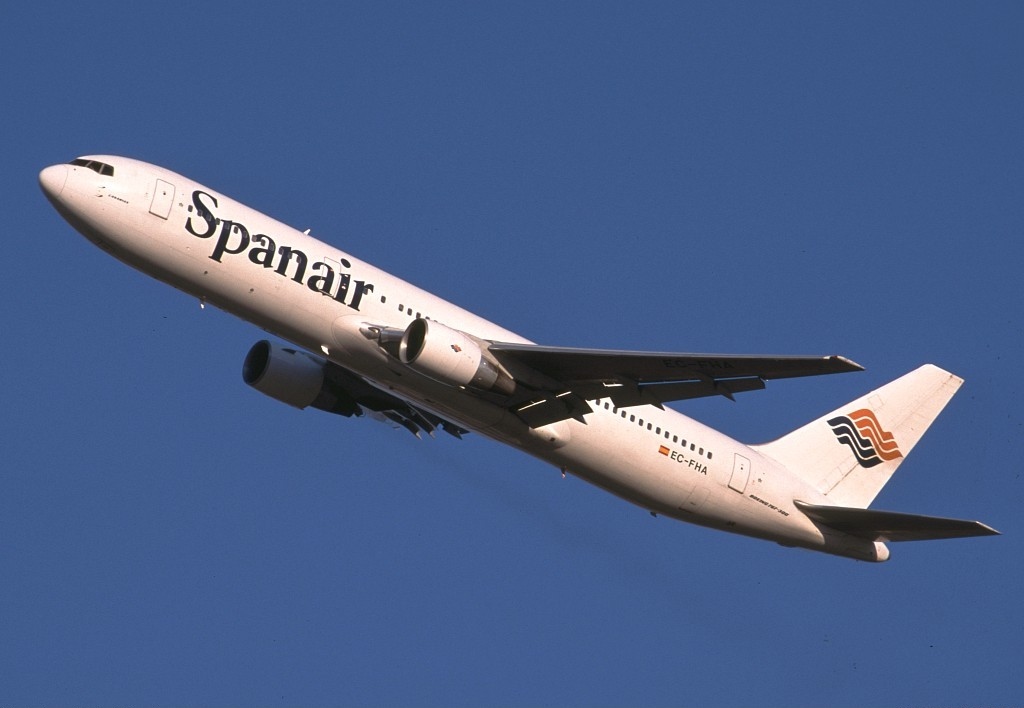
Fleet Upgrade
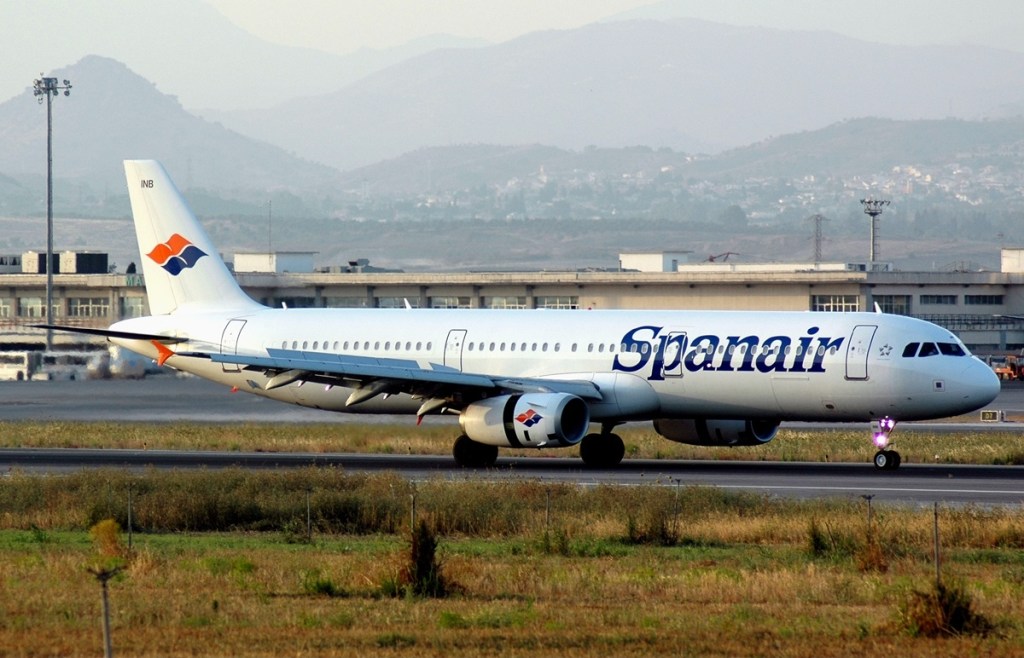
In March 1999, the airline placed an order for 7 Airbus A319s, 17 A320s, and 9 A321s. Spanair would use them to replace its 20 ageing McDonnell Douglas MD-83s and pair of MD-87s. The A319s would never be operated, focusing instead on the larger A320 and A321 models.
Expansion saw the airline grow to become Spain’s second-largest carrier. On May 1, 2003, it joined the Star Alliance, which it hoped would expand its network and services.
In May 2009, Spaniar moved its main base to the Spanish mainland. Based in Barcelona’s El Prat (BCN), the airline was seen as a flagship of the regional government of Catalonia after it purchased a majority stake in the carrier, aiming to bolster regional aviation and support its growth.
Financial Woes
However, the airline struggled financially for several years. The Catalan government would pump in more than €150 million in a vain attempt to keep it afloat. The global economic downturn of the late 2000s hit Spain’s aviation market hard, intensifying competitive pressures from low-cost carriers such as Vueling and Ryanair. Spanair’s operational costs were relatively high compared to rivals, and it struggled to differentiate itself in a crowded market.
Its money woes grew following the tragic crash of flight 5022 on August 20, 2008.
The MD-82 (EC-HFP) ‘Sunbreeze’ crashed moments after take-off from Madrid. It was the jet’s second take-off attempt after returning to stand following an earlier technical issue with the aircraft’s ram air turbine (RAT), which had overheated. Engineers later permitted the aircraft to fly, and it was during the second departure that the crash occurred. Of the 172 souls on board, just 18 survived. The subsequent investigation revealed that the jet had attempted to get airborne with incorrect flap settings. The accident was Spain’s deadliest air disaster in 25 years and intensified scrutiny of Spanair at a time when it was already under financial strain.
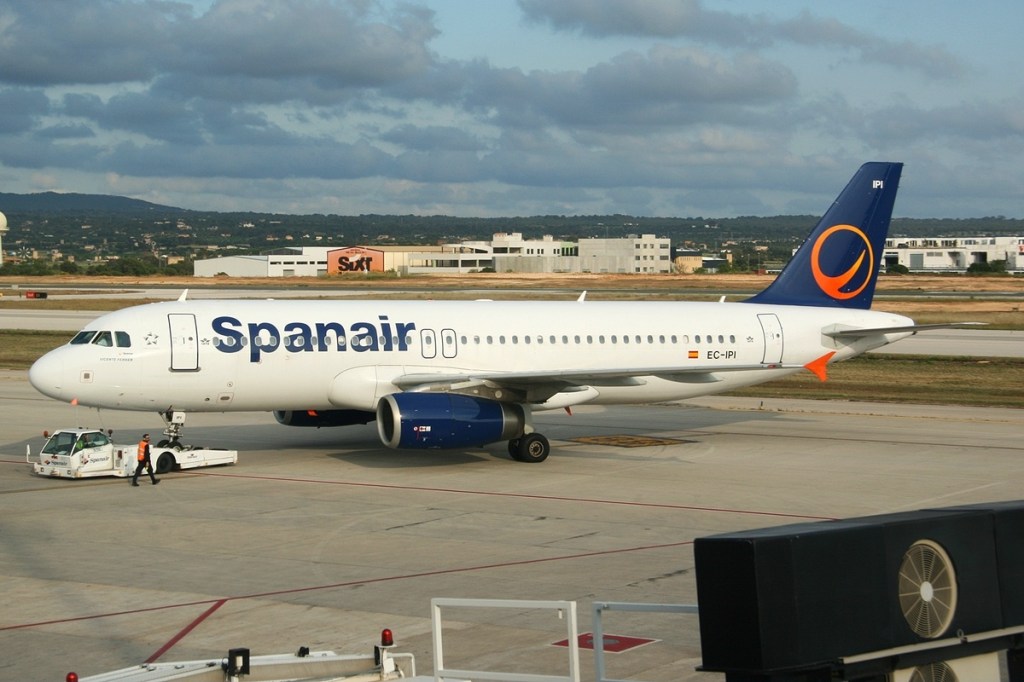
By the early 2010s, Spanair was struggling to survive. In January 2011, it was declared to be in an “emergency financial situation,” prompting the Catalan government to approve a rescue loan. Despite this support, the airline continued to incur losses and lacked the capital to sustain operations in the long term.
In early 2012, the ailing carrier entered talks with Qatar Airways (QR), which intended to inject a large sum of money. Sadly, discussions fell through. With no external investor and the regional government unwilling or unable to supply further funds, Spanair’s board decided to halt operations. Two hundred flights were abruptly cancelled, leaving 20,000 passengers stranded.
Cover photo credit: Ken Fielding/https://www.flickr.com/photos/kenfielding, CC BY-SA 3.0, via Wikimedia Commons
© Jet Back In Time by Lee Cross
 Jet Back In Time

.jpg)