
In the mid-1990s—an era when U.S. airline deregulation was still reshaping competition—Western Pacific Airlines (W7) (often branded “WestPac”) tried to build a low-fare network in the Mountain West with a simple jet fleet, aggressive pricing, and unusually bold marketing. The airline can trace its history to 1994, when a team led by Ed Beauvais, founder of America West Airlines (HP), sought to establish a new low-cost carrier.
Initially known as Commercial Air, the company was invested in heavily by Oklahoma millionaire Edward Gaylord, who also owned Gaylord Hotels. He requested that the name be changed to Western Pacific, with the airline frequently referred to as WestPac. Western Pacific’s early strategy was to use Colorado Springs as a lower-cost alternative to Denver for Front Range travellers, then extend its reach to major business and leisure markets with frequent, low-fare service.
WestPac’s New Home
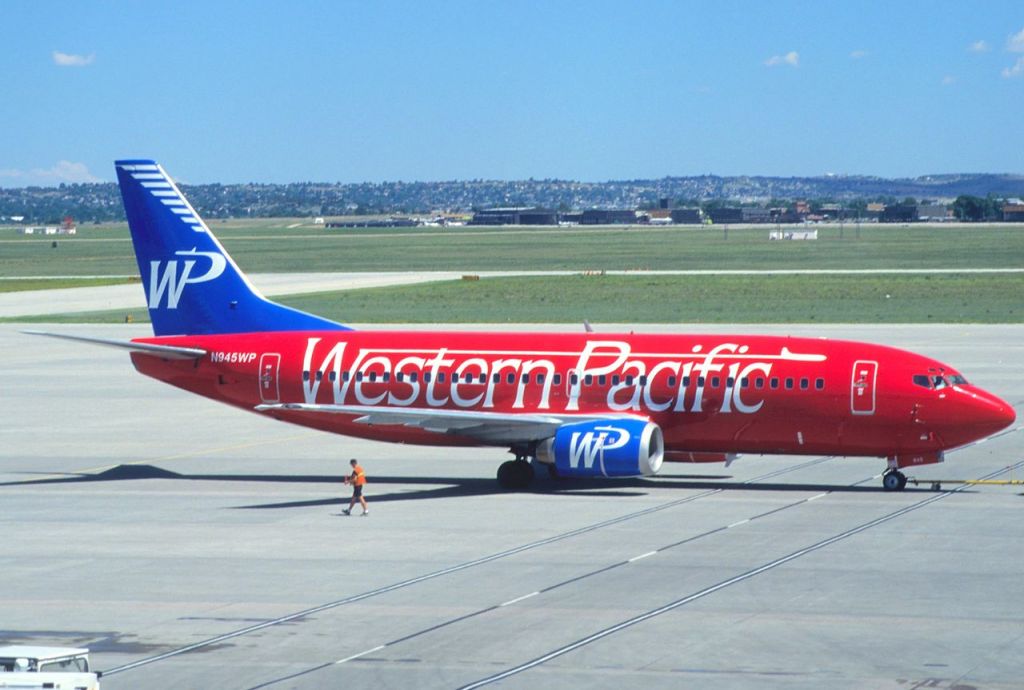
The decision to use Colorado Springs Municipal Airport (COS) as its home base was a bold move. The under-utilised facility was ripe for a new airline. This meant cheap operating costs, and with little competition, management believed this would be the key to its success.
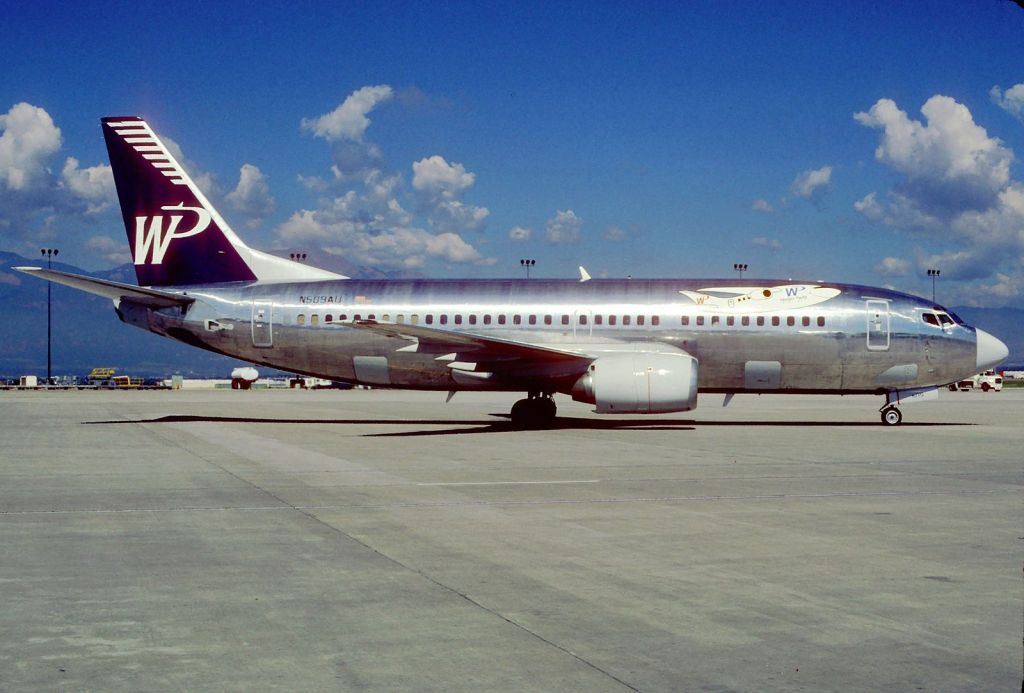
Flights commenced on April 28, 1995, from Colorado Springs to Los Angeles, Las Vegas, and Oklahoma City. To operate the flights, eight second-hand Boeing 737-300s were procured, consistent with many low-cost models of the time, thereby enabling single-type operations, simplified training/maintenance, and flexible capacity.
Flying Billboards
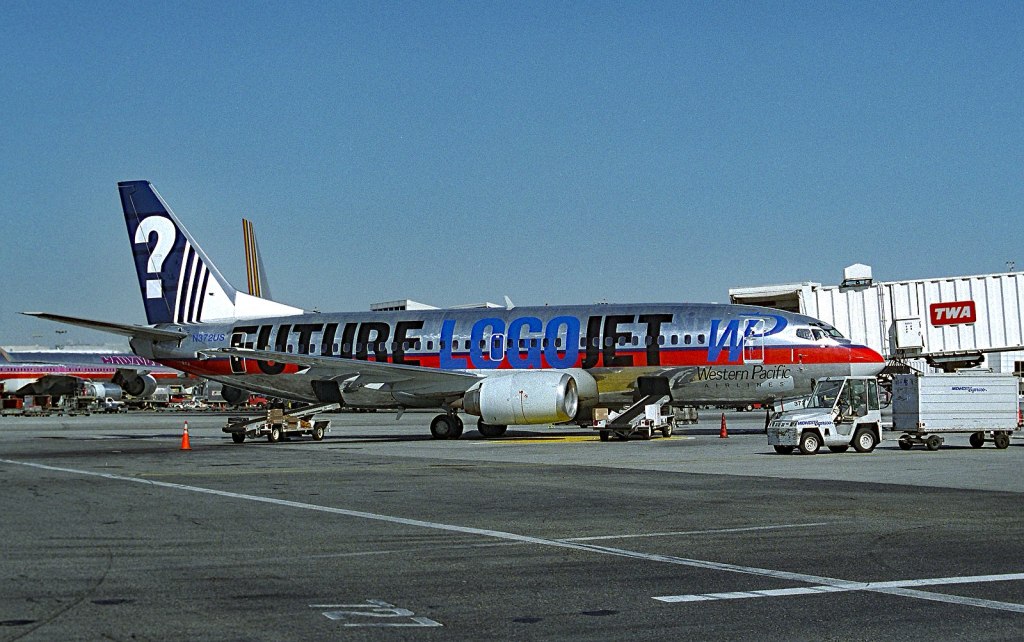
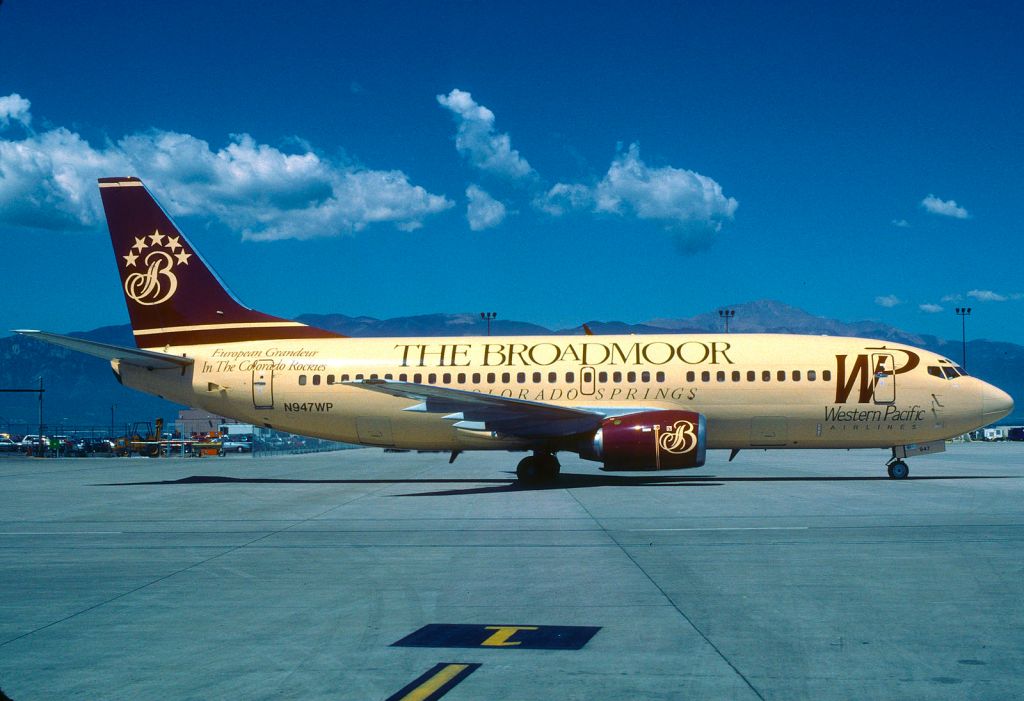
WestPac became famous for highly visible special liveries, effectively flying billboards, and was one of the first airlines in the world to do so. Known as the “AirLogo Program,” the carrier promoted businesses with which it cooperated and those within its network.
The first company to sign up was a five-star Colorado Springs hotel, The Broadmoor. Examples included Stardust Resort and Casino in Las Vegas and Thrifty Car Rental and Purgatory Ski Resort in Colorado.
But one of the most famous was the bright yellow Simpsons jet. Fox Television needed an advertising coup during that month’s Nielsen ratings sweeps for its long-running animated sitcom, The Simpsons. WestPac’s marketing staff met with Fox, who would pay $1 million for the colour scheme.
If an aircraft were not a logo jet, it would be given a catchy slogan such as “Super Summer Saver Jet” or “Winter Wonder Plane.”
At the height of its success, Westpac operated up to 80 flights per day from Colorado Springs, and its fleet swelled to 18 737-300s.

Flying High
Colorado Springs Airport was also another major beneficiary of WestPac’s presence. The facility had opened a new terminal building in 1994. The airline’s arrival massively increased passenger numbers, five million in 1996 alone and attracted other carriers to commence flights.
WestPac became a shareholder in Mountain Air Express (M7), a new regional carrier that commenced operations in December 1996. A fleet of nine Dornier 328 turboprops was acquired to provide a feed for WestPac’s services at Colorado Springs and later Denver. The airline would be sold to Air Wisconsin (ZW) in 1998.
In October 1996, WestPac placed an order with Boeing for six Boeing 737-300s with options on a further six next-generation -700 models. Deliveries would begin in May 1997.
Speaking at the time, Chairman and CEO Ed Beauvais said that the 737-300 was “in considerable demand worldwide [and] it has been difficult to acquire more to facilitate our development requirements. The agreement includes the option to acquire six 737-700s in 1998 and beyond.”
Storm Clouds Gather
However, the airline incurred $90 million in losses during its first three years. Investors soon ousted the management team, including Beauvais. A new CEO, Robert Peiser, was brought in an attempt to turn around the airline’s fortunes.
Management believed that the only way to make a profit was to transfer its operations to Denver’s new airport. Slots became available after Continental Airlines (CO) closed its hub, and in 1997, WestPac moved the majority of its services to the new facility.
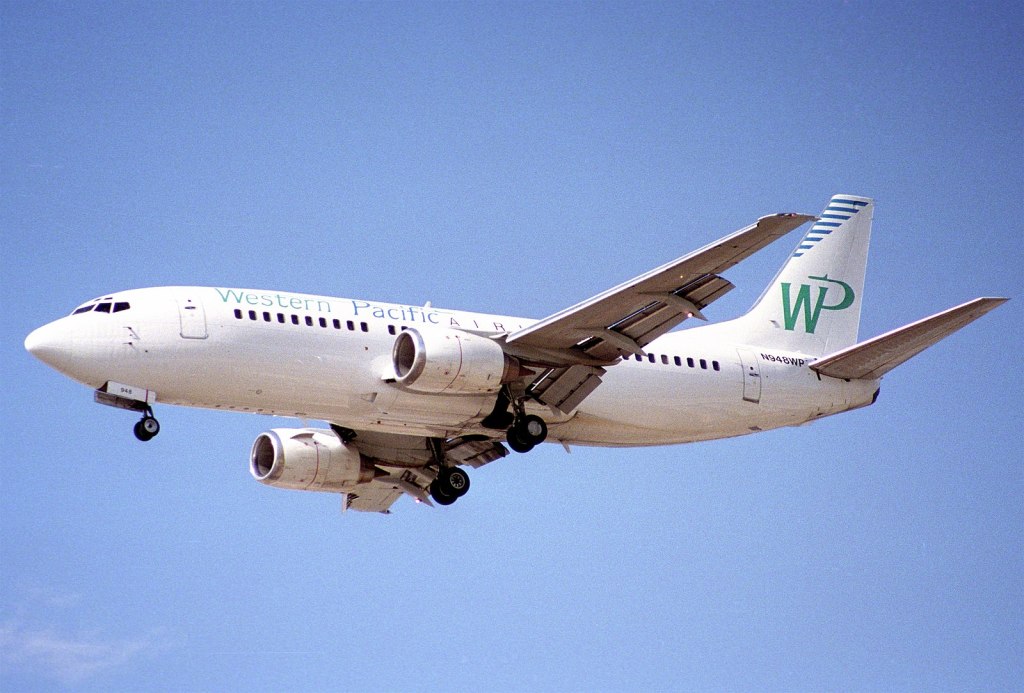
Peiser also decided to retire the airline’s logo jets. It hoped this would improve its image and attract higher-yielding business passengers. It also dropped many of its leisure routes. But the move would only increase WestPac’s debts.
WestPac’s arrival at DEN also marked the start of a codeshare agreement and discussions of a potential merger with another low-cost carrier, Frontier Airlines (F9). The merger would have created the second-largest low-cost airline in the U.S. after Southwest Airlines (SW).
However, WestPac’s precarious financial situation led Frontier to withdraw from the deal. “Cultural differences” were cited as the reason for the split. At the time, CEO Peiser said: “The merger was taking a toll on employee morale, financial performance and operations of both airlines. We also believe that given our cultural differences and the contrast in our scheduling philosophies, it is in the best interests of both companies to remain independent.”
The major airlines at Denver, including United, were not prepared to allow another low-cost carrier erode their market. When WestPac began operations on their turf, they immediately lowered fares, further damaging the company’s finances.
Then, Valujet (J7) Flight 592 crashed on May 11, 1996. Issues around maintenance and procedures at the airline were brought to light. This would significantly impact public perception of the newly emerging low-cost airlines.
Bankruptcy
WestPac declared Chapter 11 bankruptcy protection in December 1997 after announcing losses for the year of $87.7 million. It subsequently obtained court approval for its reorganisation plan. This would include an initial $10 million loan from Smith Management Company (SMC) to keep the airline afloat. A further $10-20 million was due starting on December 20.
Despite Peiser’s optimism: “We believe Western Pacific’s turnaround was imminent, as evidenced by our bookings,” the carrier was forced to ground its operations on February 4, 1998, after a key investor pulled out of a rescue plan.
What Western Pacific left behind
Western Pacific’s legacy is disproportionate to its brief life: it’s remembered as a creative, attention-grabbing low-fare airline that sought to leverage Colorado’s secondary-market potential and a feeder network into a sustainable hub operation.
Yet its end illustrates a core lesson of airline economics: branding can help people notice you, but it can’t compensate for sustained losses, tight credit, and the unforgiving math of aircraft lease obligations—especially in a market where a dominant hub carrier can match fares and outlast a smaller rival.
Cover image credit: Richard Silagi (GFDL or GFDL), via Wikimedia Commons.
N.B. The author does not own the rights to any of the images included in this article unless otherwise stated.
© Jet Back In Time by Lee Cross
 Jet Back In Time
.jpg)
